São Vicente to São Nicolau: The Ferry to Cape Verde's Hidden Gem
Search São Vicente → São Nicolau ferriesThe ferry between São Vicente and São Nicolau is one of the most rewarding sea crossings in Cape Verde — the slow, scenic way to reach an island that mass tourism has largely passed by. Operated by CV Interilhas on its Linha Redonda, it connects Mindelo on São Vicente with the port of São Nicolau, the gateway to one of the archipelago's most culturally rich and least-visited islands.
The Route
The ferry runs between Mindelo, the cultural capital of Cape Verde on São Vicente, and São Nicolau, landing near Preguiça on the island's south coast (a short hop from the capital, Ribeira Brava). It is part of CV Interilhas' Linha Redonda, the circuit that links São Vicente, São Nicolau, Sal, Boa Vista and Santiago.
As a longer, more open-water crossing than the short São Vicente–Santo Antão hop, conditions can be noticeably rougher, especially between November and March when the Atlantic swell picks up. The Redonda line is one of the routes most affected by weather, so sailings can be delayed or cancelled in poor conditions.
How Long Does the Crossing Take?
The crossing takes approximately 5 to 6 hours, depending on the vessel and sea conditions. It is a half-day journey rather than a quick hop, so plan for a comfortable seat, bring water and snacks, and be prepared for open-ocean swell on rougher days.
How Often Does the Ferry Run?
São Nicolau is served roughly twice a week by CV Interilhas' Redonda line, with an occasional third sailing every two weeks when the line runs its extended "Rectangular" routing (São Vicente – São Nicolau – Santiago – Fogo). Because the exact days shift with the fortnightly rotation and the seasonal timetable, the best way to find current departures is to search the live schedule on Ondas rather than rely on a fixed weekly pattern.
CV Interilhas typically publishes its detailed schedule only at the end of each month for the following month, so you usually cannot book far in advance.
Which Operator Serves This Route?
CV Interilhas is the only operator on this route. The vessel is the Dona Tututa, which serves the full Linha Redonda circuit connecting São Vicente, São Nicolau, Sal, Boa Vista and Santiago.
Nôs Ferry does not operate on this route — it serves the São Vicente to Santo Antão crossing only.
Buying Tickets
For a longer, less frequent route like this one, booking ahead is recommended — especially around holidays, Easter week, and São Nicolau's festivals, when seats fill quickly and locals travel home. Because the schedule is usually released only a month ahead, tickets become available relatively close to the travel date.
Tickets can be purchased online at cvinterilhas.cv or at the CV Interilhas ticket office in Mindelo's ferry terminal.
The non-resident fare is approximately 2,850 CVE (~€26) per person each way. Cape Verdean residents pay a reduced fare of approximately 1,900 CVE (~€17).
Route: Mindelo (São Vicente) → Preguiça (São Nicolau)
Operator: CV Interilhas (vessel Dona Tututa)
Duration: approximately 5 to 6 hours
Frequency: roughly twice a week (varies with rotation)
Price: residents 1,900 CVE (~€17) · non-residents 2,850 CVE (~€26)
Arriving at the Port
In Mindelo, ferries depart from Cais Marítima, the main ferry terminal, walkable from the city centre. On São Nicolau, the ferry uses the port near Preguiça, a short drive from the capital Ribeira Brava — aluguer (shared minibus) and taxi connections meet arrivals.
Arrive at least 30 to 45 minutes before departure. Boarding closes before the scheduled time and the ferry will not wait for late arrivals. For a long crossing like this, earlier is better.
Getting to São Nicolau: Ferry or Flight?
São Nicolau has no international airport, so you reach it either by domestic flight or by sea. CVSky, Cape Verde's domestic airline, flies to Preguiça Airport (SNE) several times a week from Santiago, São Vicente and Sal — check cvsky.cv for current routes and times.
The ferry is the slower and cheaper way in, and the one most travellers take when they want to arrive the way Cape Verdeans always have: by sea.
Why People Take This Ferry
São Nicolau is often called Cape Verde's best-kept secret. Mountainous and green, with deep valleys, volcanic plains and a dramatic coastline, it has been spared the mass tourism of Sal and Boa Vista — and its isolation has become its charm. Travellers describe it as "a bit of every island": the hiking of Santo Antão, the colonial-town beauty of the older islands, black- and white-sand beaches, and natural pools, all on one quiet island.
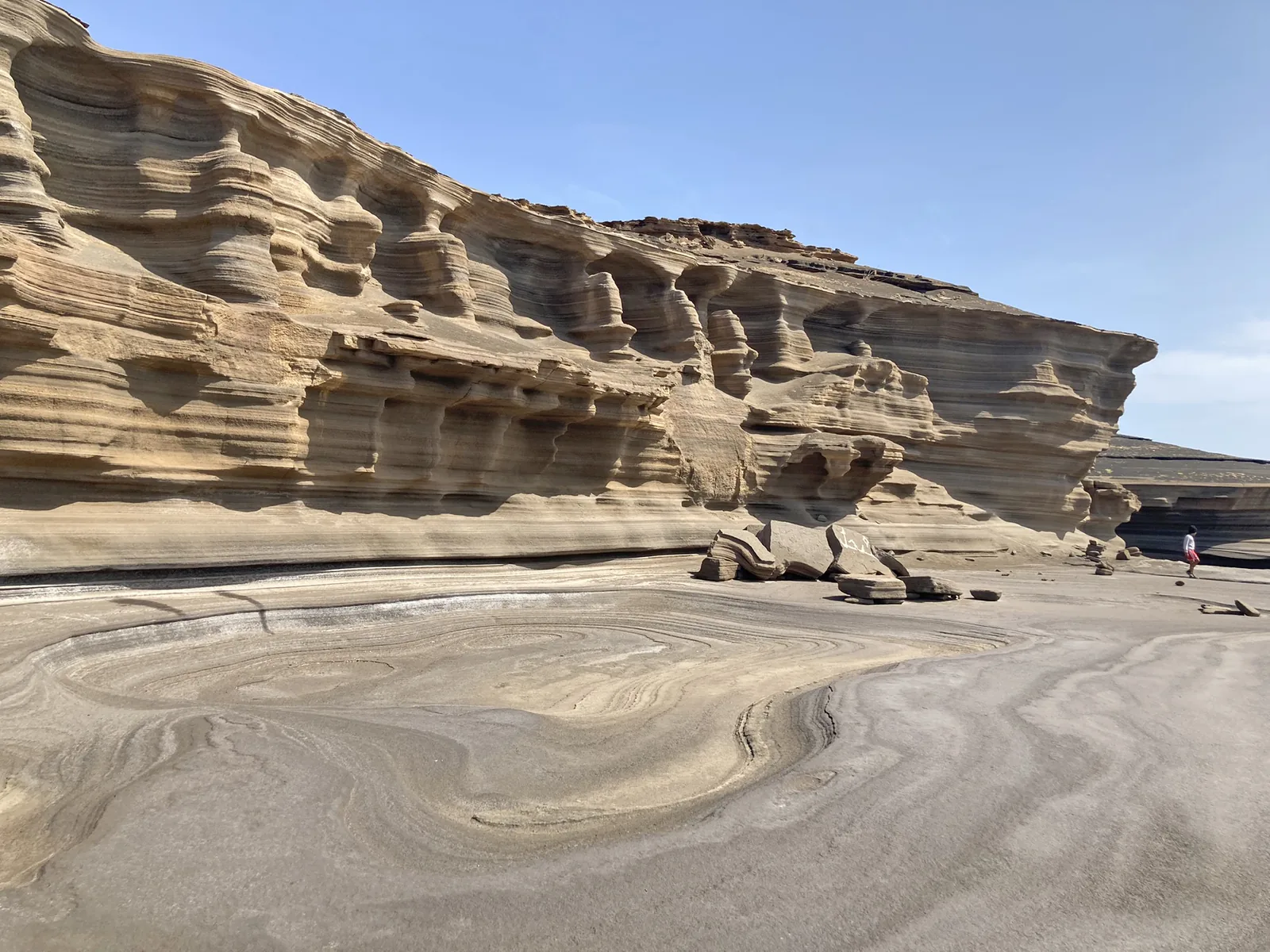
The island holds two of the Seven Wonders of Cape Verde: Monte Gordo Natural Park, crowned by the 1,312-metre peak of the same name, and Carberinho, a surreal landscape of wind- and sea-sculpted sandstone formations on the west coast. Other draws include the natural tidal pools at Juncalinho, the black-sand beaches around Tarrafal, and the long hiking trails through the Fajã and Ribeira da Prata valleys.
The island's capital, Ribeira Brava — known to locals simply as Vila — is frequently described as one of the prettiest towns in Cape Verde, a cluster of pastel colonial houses, narrow streets and a baroque church set in a mountain valley.
The Cultural Heart of Cape Verde
São Nicolau holds a special place in Cape Verdean identity: it is widely regarded as a birthplace of Cape Verdean intellectual and literary culture. In 1866 the island's Seminário-Liceu de São José in Ribeira Brava became the first seminary in the archipelago, and for decades it was the islands' foremost centre of learning — the place where much of the country's early educated class was formed.
That heritage runs straight into the Claridade movement, the literary and cultural awakening that defined modern Cape Verdean identity and asserted the Creole language at its centre. One of its three founders, the writer and linguist Baltasar Lopes da Silva, was born on São Nicolau, as was the earlier poet José Lopes da Silva. The island's relative isolation, far from the colonial centres of power, helped it develop a distinct Creole identity of its own — and that quiet, self-contained character is still what visitors feel today.
São Nicolau also lives in the music of Cape Verde: it is among the islands evoked in the songs of Cesária Évora, carrying the same sense of saudade and longing for home that defines morna.
Other Routes From São Vicente
São Vicente is also the starting point for the daily ferry to Santo Antão (60 minutes, multiple daily crossings with both CV Interilhas and Nôs Ferry). The Mindelo to Praia route via the Redonda circuit connects São Vicente to Santiago and the southern islands.
You can search all routes from São Vicente using the Ondas search tool.